


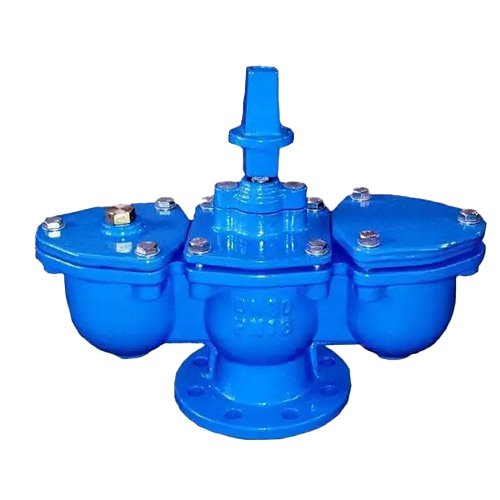
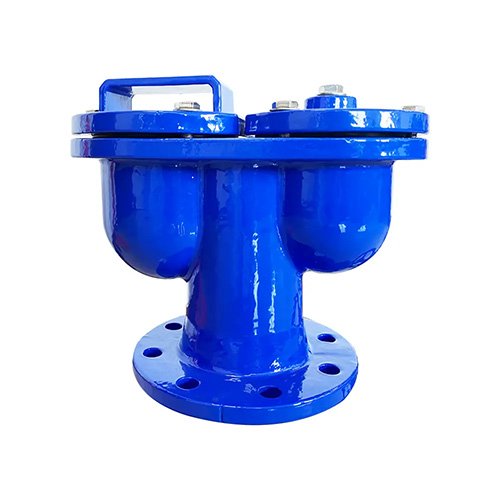
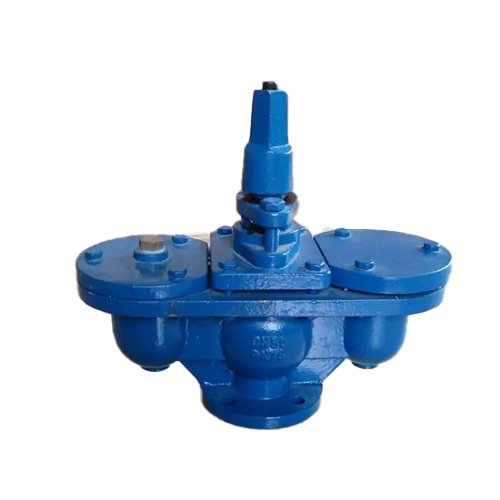
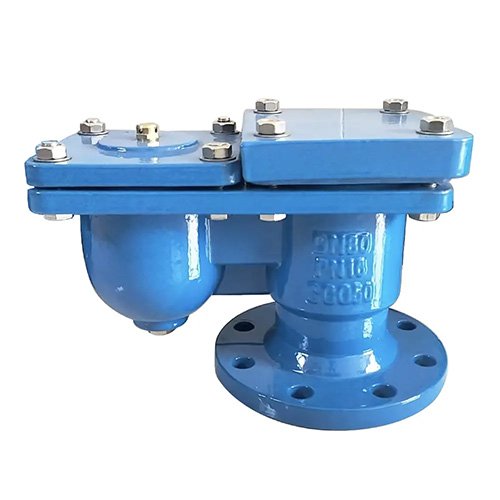
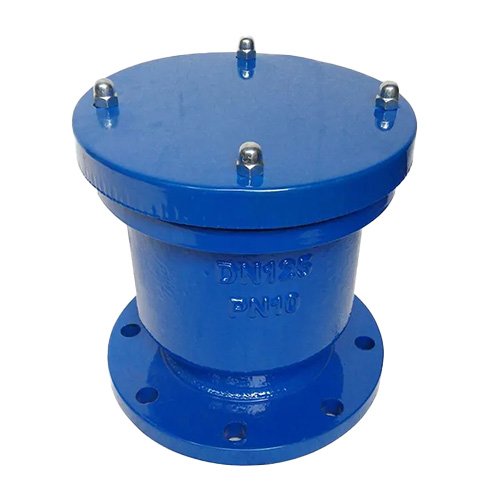
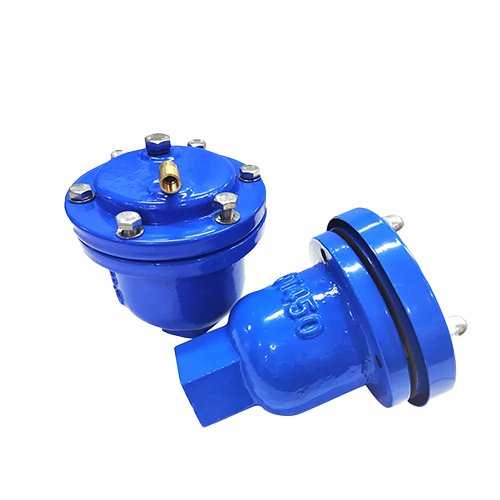
Air Valve
The exhaust of pipelines is a very important and complex issue. As an accessory facility, the air valve has a significant impact on the operating status of the pipeline system and the power consumption of the water pump. It is widely used in fire fighting, water supply and environmental protection engineering.
In Pipeline the Exhaust Principle of the Air Valve
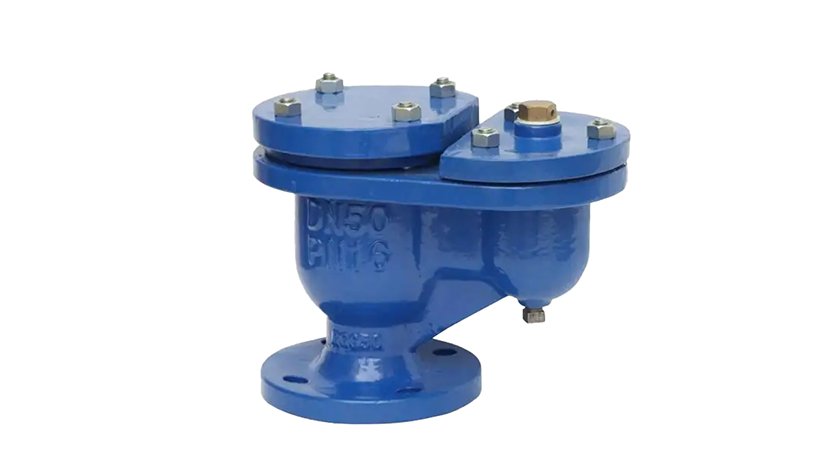
This type air valve must be provided with two holes (one large and one small), and the large hole is basically equal to the diameter. When water is first passed through the pipeline, a large amount of gas is discharged outward, and this gas is discharged through large holes.
When the gas is exhausted, the large hole stops venting. During normal operation of the pipeline, gas will naturally be gather inside the pipe. These gases will gradually grow larger and concentrate at the upper part of the pipe, which will have a certain impact on the water output of the pipe. These gases are discharged through the small hole, leaving no gas inside the pipe.
The Hazards of Air in Pipelines
Increase the frictional resistance along pipeline. Bubbles increase the flow volume of water, raising the relative flow velocity between water and the pipe wall, that is, the frictional head loss increases. As a result, the head of the water pump rises and the water output decreases.
Increase local resistance.
Bubbles accumulate to form airbags, reducing the cross-sectional area of the pipeline flow, increasing the head loss. When air resistance is formed, even the water pump cannot discharge water at the designed flow rate. When the pipeline has significant undulations along the way, resulting in multiple large drops of water, and multiple top air resistance height differences superimpose, it is difficult to discharge water when approaching or reaching the head of the water pump, and even no water is discharged at the terminal outlet of the pipeline.
For instance, for pipelines with a diameter of DN400 and below, no leakage test is conducted. Only when the pressure drop does not exceed 5m within 10 minutes is it considered qualified. When the pipeline exhaust is not complete, the air is compressed during the pressure test. Although the leakage of the pipeline is relatively large, it is compensated by the volume expansion of the compressed air, resulting in a small pressure drop and failing to truly reflect the sealing performance of the pipeline.
The valve is a valve device that automatically drains the accumulated gas in the pipeline through buoyancy or pressure changes to prevent air blockage and cavitation erosion and ensure the stable operation of the fluid system.
According to different application scenarios, air valves can control pipeline gas emissions or internal combustion engine exhaust gas emissions. The core functions are centered on medium flow efficiency and system stability.
The pipeline system is mainly based on the highest point and key node, and the rear of the midsection muffler drum is the best for vehicle modification. Vertical installation and sealing are the universal core requirements.